HISTORICAL HIGHLIGHT
Ohio National Guard Heritage Center
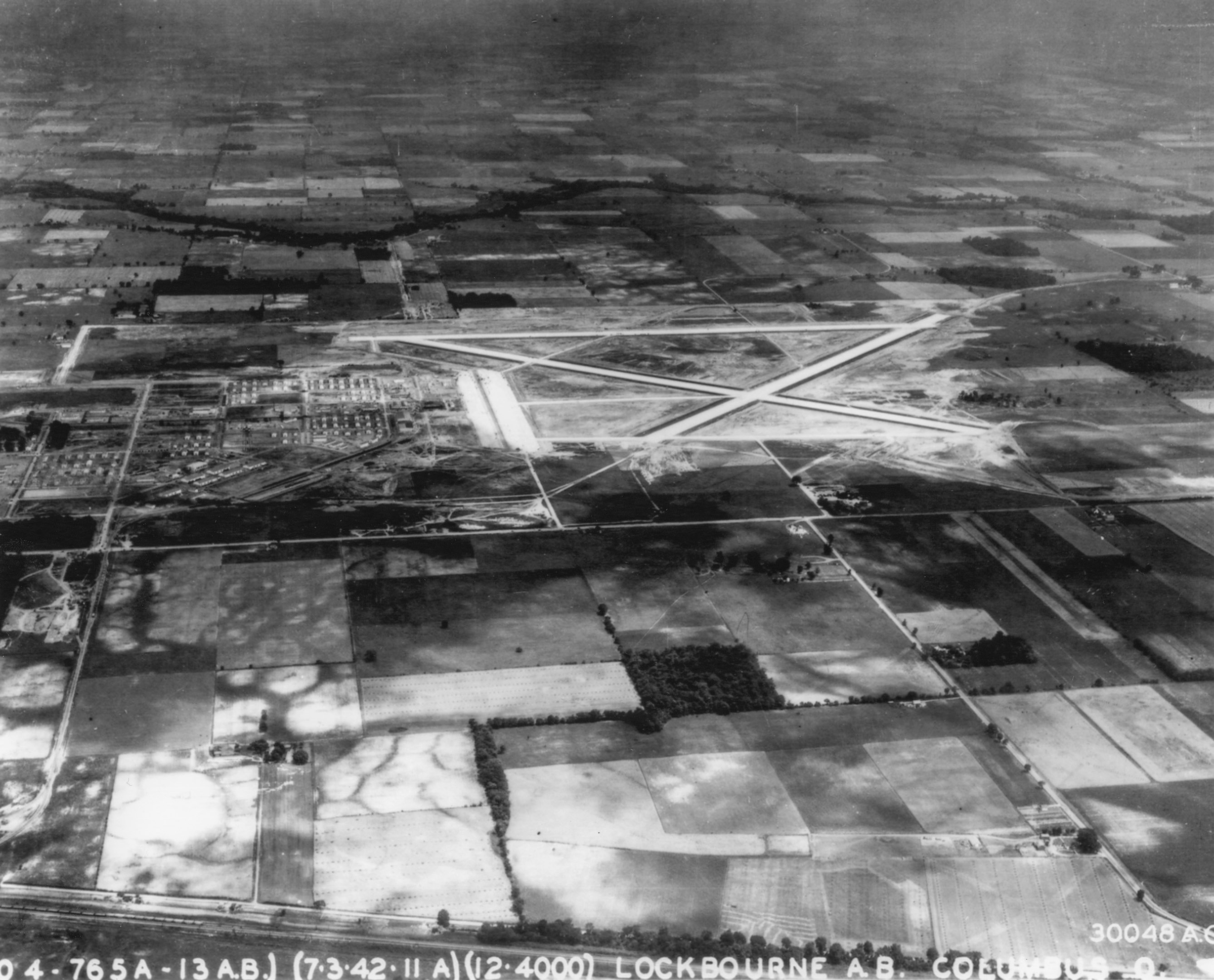
Lockbourne Army Air Base as it appeared on July 3, 1942, just two days after officially opening. On the same day, the Army Air Forces Advanced Glider Training Detachment was activated.
Ohio National Guard Heritage Center
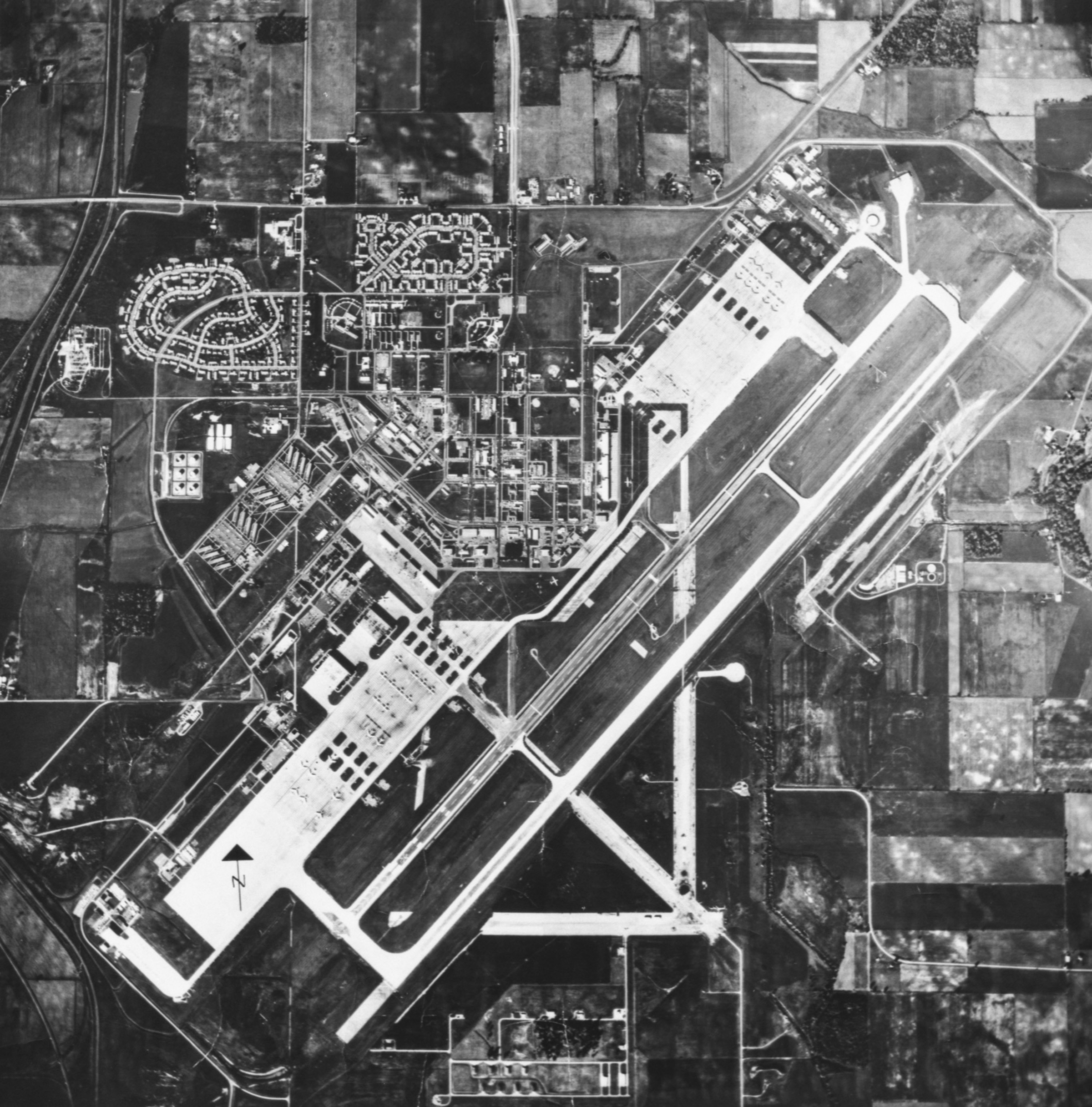
An aerial view of Lockbourne Air Force Base in 1965.
Ohio National Guard Heritage Center
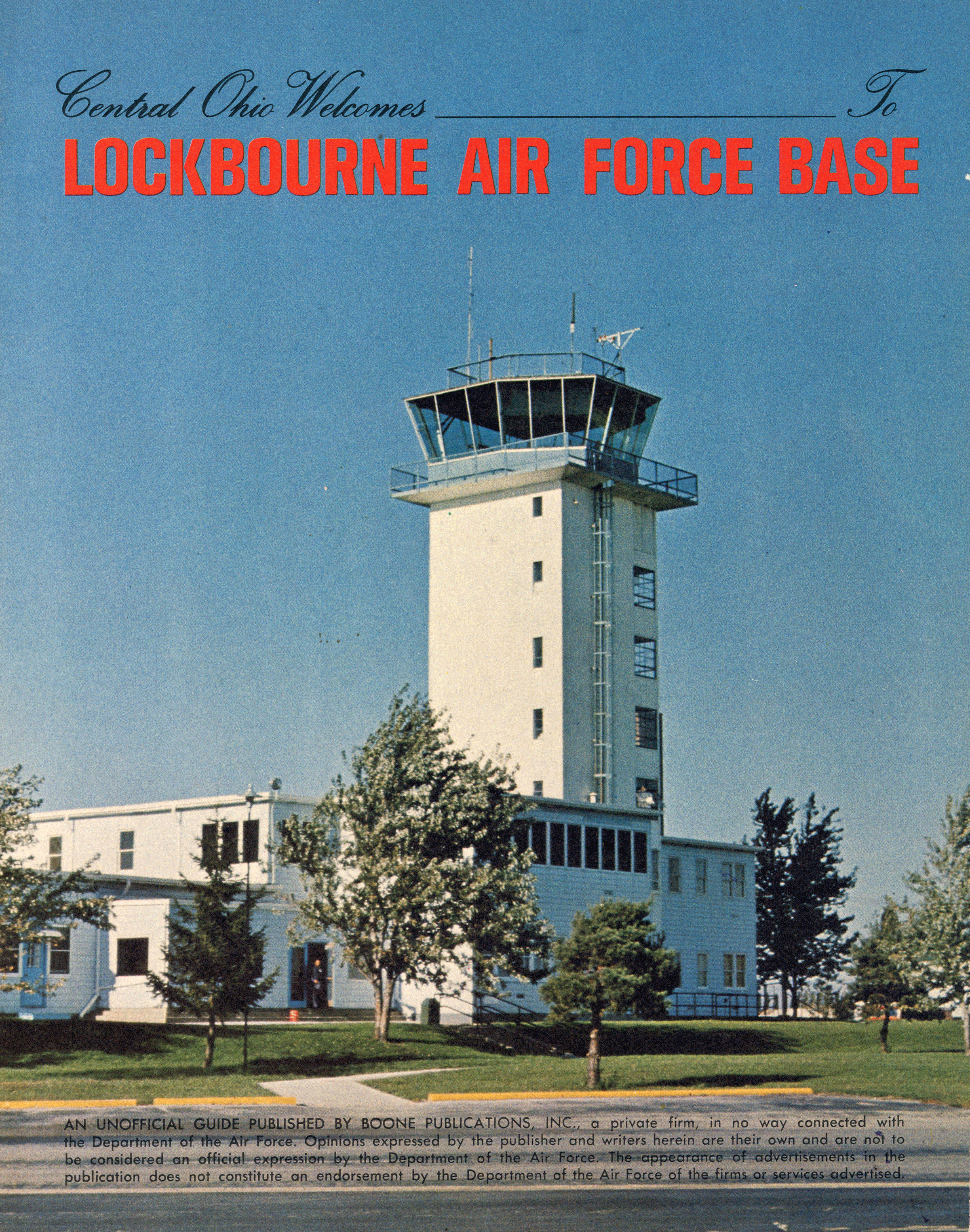
The cover of a magazine welcoming Air Force personnel to Lockbourne Air Force Base in the 1970s.
Ohio National Guard Heritage Center
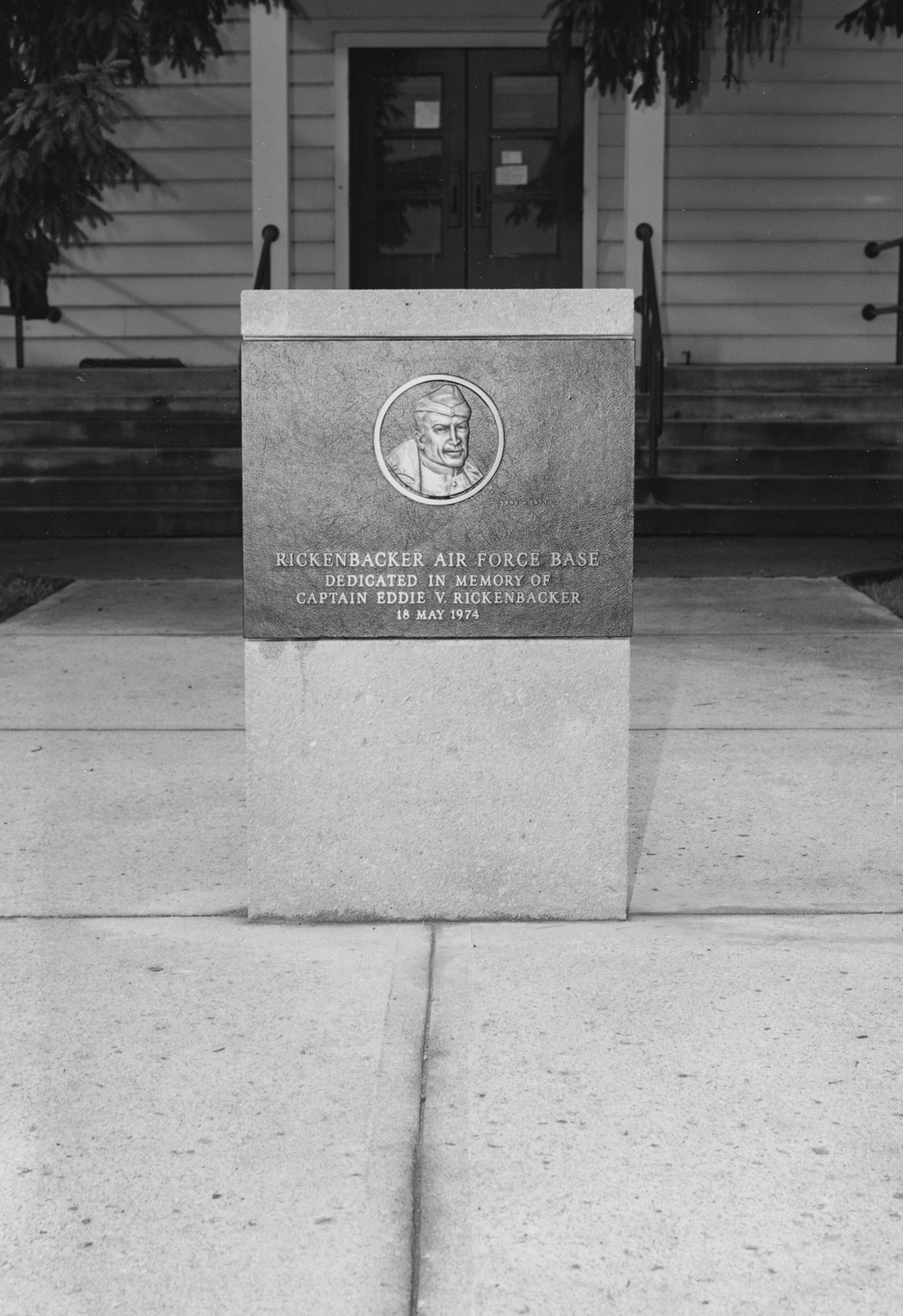
The memorialization plaque for Rickenbacker Air Force Base. The installation name was changed from Lockbourne to Rickenbacker on May 18, 1974, less than a year after World War I Medal of Honor recipient and Columbus native Eddie Rickenbacker died at 82.

Ohio National Guard Heritage Center
Robert Stuart, right, a member of the 1991 Base Realignment and Closure Commission and Brig. Gen. Gordon Campbell, Ohio assistant adjutant general for Air, speak to the media during a visit by Stuart to Rickenbacker Air National Guard Base in June 1991.
A Base Reborn: Rickenbacker’s Historic Pivot
Transfer to Ohio ANG launched new era of joint operations, shared skies
Story by Joshua Mann, Ohio National Guard Historian
On April 1, 1980, custody and operation of Rickenbacker Air Force Base was transferred from the U.S. Air Force to the Ohio Air National Guard. As a result of a base realignment and closure decision, Rickenbacker was going to be transitioned to a joint civilian/military usage installation after 38 years of active-duty military operations.
The base was established in 1942 south of Columbus, Ohio, near the village of Lockbourne, as Lockbourne Army Air Base. During World War II, the installation was the site of advanced glider training and B-17 pilot and instructor training. After the war, the famous Tuskegee Airmen arrived, and Lockbourne served as the final home of the all-Black unit before the military began ending racial segregation in 1948. During the post-WWII Cold War, Strategic Air Command, Air Defense Command and Tactical Air Command had elements operating from the base.
The Ohio National Guard established the 166th Tactical Fighter Squadron at Lockbourne in January 1947. In December of that year the 55th Fighter Wing, later redesignated as the 121st Fighter Wing, was also established at the base under the command of Brig. Gen. Errol H. Zistel.
In 1974, Lockbourne Air Force Base was renamed for Columbus native and World War I flying ace Capt. Eddie Rickenbacker. During the same period, discussions at the national level hinted at a possible closure of the base. Missions and personnel at the base had dwindled to their lowest numbers in decades. The base infrastructure, mostly built during World War II, needed major upgrades. With another major Air Force installation in Dayton — Wright-Patterson Air Force Base — only 100 miles away, federal government officials decided that Rickenbacker was prime for closure.
Officials at the local, state and national levels offered Washington an alternate plan to realign the base, rather than close it. In 1979, the Franklin County Commissioners formed the Rickenbacker Port Authority, or RPA, which would facilitate the gradual transfer of excess base acreage to commercial development. Ohio Air National Guard and Air Force Reserve units continued to operate the flight line and key facilities until the official transfer the following spring. On Sept. 19, 1979, the final active-duty unit, the 301st Air Refueling Wing, cased its unit colors, ending nearly four decades of active-duty operations by the Air Force.
With the transfer to the Air National Guard, the 4,300-plus-acre installation concurrently became Rickenbacker Air National Guard Base. The Air Force maintained a small detachment there until 1985 to manage and facilitate the transfer of excess property and facilities. The Ohio Adjutant General’s Department also created a 300-person force of civilian employees that provided base operations and services for the remaining reserve formations. In 1984, the RPA received custody of 1,642 acres of land to begin the commercial development of the area.
The 1991 Base Realignment and Closure Commission recommended the base again be closed. Once again, local, state and national officials offered an alternative plan that was accepted by the commission. Under the plan, Ohio Air National Guard units would remain at Rickenbacker, while the RPA assumed management for the site. On Sept. 30, 1994, the site was renamed Rickenbacker International Airport, with the Ohio Air National Guard operating as a tenant unit from a cantonment area known as Rickenbacker Air National Guard Base.